

Deportation & Removal Defense
If you've received a Notice to Appear or have a hearing in immigration court.
See deportation defense
For people who fear returning to their country because of who they are or what they believe, and want to know whether asylum is a realistic option.
If you're afraid to return to your home country, you may be wondering whether asylum is an option for you. Sometimes it is, but asylum has strict rules.
Asylum can't cover every hardship, or every general problem that people around the world face. It's for people who face severe persecution because of who they are or what they believe.
At a consultation, we'll review your situation and explain whether asylum or another option may fit.
An asylum application generally has to be filed within one year of arriving in the United States. In most cases, filing after that is a serious problem for the case.
So the first question we ask is when you arrived. If more than a year has passed, talk with us.
Asylum has to be based on one of five categories: your race, religion, nationality, political opinion, or membership in a particular social group.
Not every threat or act of harassment counts as persecution. We look at how serious it was, the circumstances, and whether it connects to one of the five categories.
At the consultation, we explain what these categories mean in plain terms, and whether your situation may fit one of them.
Step by step
If you're not in immigration court (you haven't received a Notice to Appear), your application goes to USCIS, along with the evidence that supports it. There's a filing fee, and a yearly fee while the application is pending. We'll tell you the current amounts at the consultation.
An asylum officer interviews you about your application. We prepare you for the interview from start to finish.
After the interview, USCIS reviews your case. It may grant asylum or, depending on the circumstances, refer your case to immigration court. We'll explain the decision and what comes next.
If you're already in immigration court (removal proceedings), asylum is raised there, as a defense to removal. That work is covered on our Deportation & Removal Defense page.
Our role
We start with an honest screening: when you arrived in the United States, and whether your situation fits one of the categories. If asylum fits, we prepare the record carefully, focused on the facts and documentation that matter to your case.
Every filing goes out with a tracking number, so we know when it's received, and we let you know about every letter the government sends about your case.
We work with clients across Northwest Arkansas. Immigration law is federal, so we also take immigration cases from Southwest Missouri, from northeast Oklahoma, including the Tulsa area, and from elsewhere in the United States. Every consultation can be in English or Spanish.
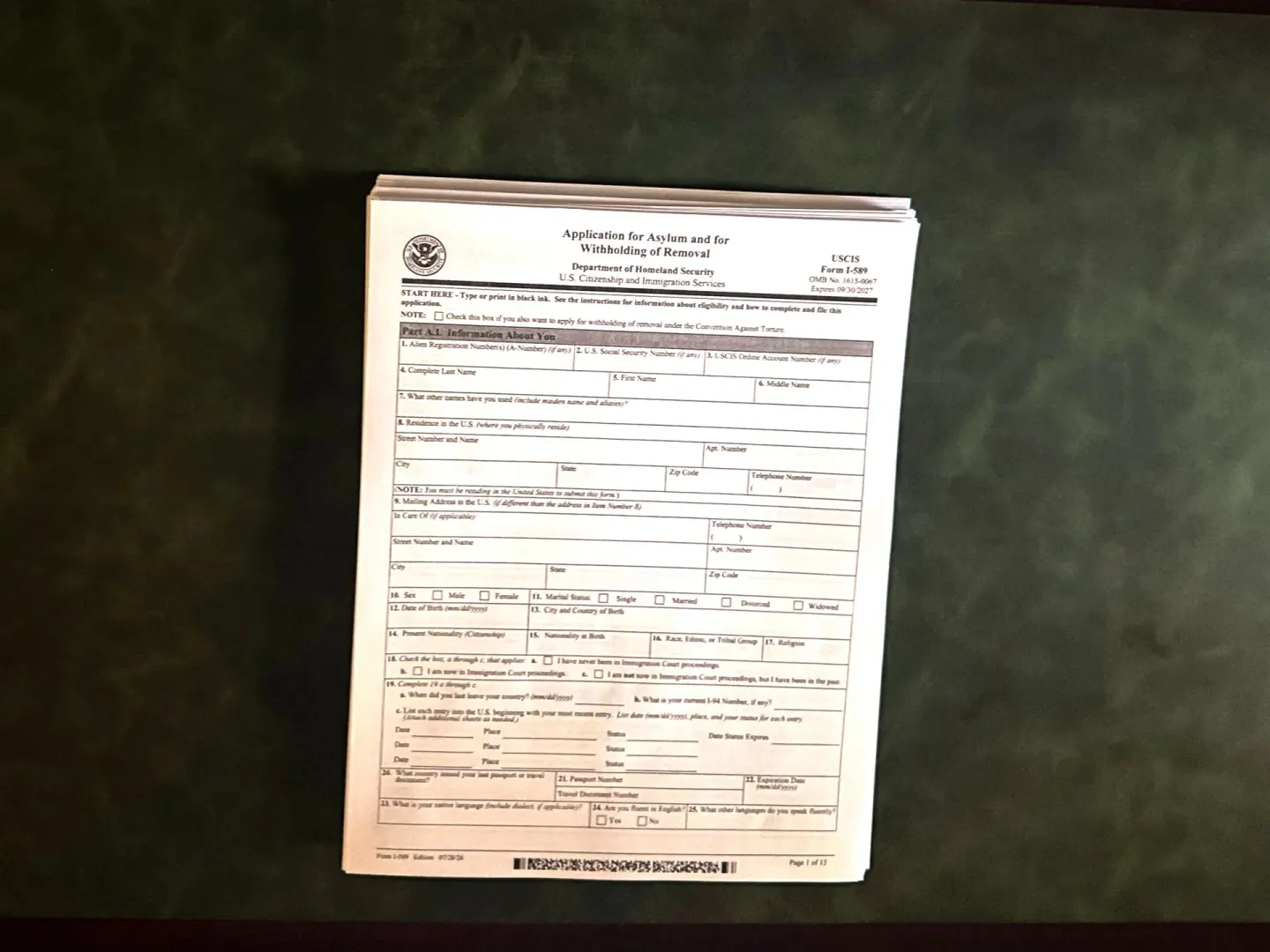
Filing after the first year is generally a serious problem for an asylum case. If more than a year has passed, talk with us.
Asylum is for people who face severe persecution because of their race, religion, nationality, political opinion, or membership in a particular social group. It isn't for every hardship, and not every threat or act of harassment counts as persecution. At the consultation, we look at how serious it was, the circumstances, and whether it connects to one of those categories.
In many cases, a work permit becomes available while your asylum case is pending. We'll tell you when you can apply for one, and we can handle that application too.
It depends on where your case is. If USCIS doesn't grant your application, the case may continue in immigration court. If an immigration judge denies asylum, an appeal may be possible. Court cases and appeals are covered on our Deportation & Removal Defense page.
You aren't required to have a lawyer. In fiscal year 2026, asylum seekers in immigration court who had a representative were about four times more likely to be granted asylum than those who didn't, according to TRAC at Syracuse University. We can review your situation, prepare the application and supporting documents, and help you get ready for the interview.
If you've received a Notice to Appear or have a hearing in immigration court.
See deportation defenseU visas, T visas, Special Immigrant Juvenile Status, and VAWA.
See humanitarian reliefMarriage green cards, adjustment of status, consular processing, and family petitions.
See family-based immigration